
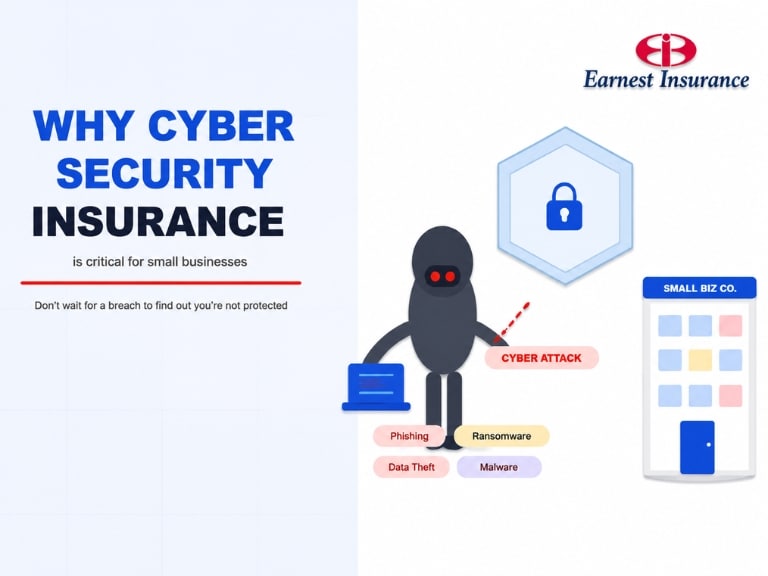
Introduction: Cyber Risk Is No Longer a “Big Company” Problem
For many small businesses, cyber security still feels like a concern reserved for large corporations, banks, or tech companies., Unfortunately, that belief is no longer true. Today, small and medium-sized businesses (SMEs) are among the most targeted victims of cyber attacks, often because attackers know they have fewer safeguards in place.
In an increasingly digital business environment, even a single cyber incident can disrupt operations, damage customer trust, and create serious financial losses. This is why solutions like cyber risk insurance in dubai and cyber security insurance has become a critical risk management tool, not an optional extra, for small businesses.
Why Small Businesses Are Prime Targets for Cyber Attacks
Hackers do not only pursue large enterprises. In fact, small businesses are often seen as easier targets.
Common reasons SMEs are vulnerable:
- Limited investment in advanced cyber security systems
- Lack of dedicated IT or cyber security teams
- Heavy reliance on cloud platforms, emails, and online payments
- Lower awareness of cyber threats among employees
Cybercriminals exploit simple weaknesses such as weak passwords, phishing emails, unsecured Wi-Fi networks, and outdated software. Even a basic mistake can open the door to a serious breach.
Understanding Cyber Insurance:
Cyber insurance is broadly divided into two categories:
First-Party (your losses) and Third-Party (others claiming against you).
Lets explore what your cyber insurance policy covers:
| Category | Coverage Type | What It Covers | Why It Matters |
| First-Party | Incident Response | Costs of forensic investigation, breach management, legal advisors, and crisis response | Helps you act immediately and control damage after an attack |
| First-Party | Business Interruption | Loss of income and ongoing expenses due to system downtime | Keeps your business financially stable during disruptions |
| First-Party | Data & System Recovery | Restoring lost data, repairing systems, rebuilding IT infrastructure | Ensures quick recovery and continuity of operations |
| First-Party | Cyber Extortion (Ransomware) | Ransom payments, negotiation costs, expert support | Protects you from financial and operational impact of ransomware attacks |
| Third-Party | Privacy & Network Security Liability | Claims arising from data breaches, failure to protect information, or spreading malware | Covers legal costs and compensation if others sue your business |
| Third-Party | Media Liability | Claims related to defamation, copyright infringement, or misuse of digital content | Protects your business from risks linked to marketing and online content |
Why Cyber Security Insurance Is Critical for Small Businesses
1. It Protects Cash Flow
A single cyber incident can create unexpected expenses that strain or even collapse a small business’s finances. Insurance helps absorb these costs.
2. It Supports Faster Recovery
Cyber insurance often includes access to expert incident response teams, helping businesses recover faster and minimize damage.
3. It Enhances Business Credibility
Having cyber insurance demonstrates responsibility and risk awareness—important when dealing with customers, partners, and regulators.
4. It Complements Cyber Security Measures
Even the best security systems cannot guarantee 100% protection. Insurance acts as a financial safety net when prevention fails.
5. It Prepares Businesses for Regulatory Expectations
As data protection laws and compliance requirements increase, cyber insurance helps businesses handle legal and regulatory obligations properly.
Common Misconceptions About Cyber Insurance
“We are too small to be attacked”
Small businesses are often targeted precisely because attackers expect weaker defenses.
“Our IT provider will handle everything”
IT support helps with prevention and recovery, but it does not cover financial losses, legal costs, or liability claims.
“Cyber insurance is too expensive”
The cost of a policy is often far lower than the cost of recovering from even a minor cyber incident.
Cyber Risk Is a Business Risk, Not Just a Technical Risk
In today’s environment, cyber threats directly affect:
- Revenue
- Operations
- Customer trust
- Long-term business continuity
Treating cyber risk as a purely technical issue leaves businesses exposed. Cyber security insurance ensures that when incidents occur, the business can survive, recover, and continue operating.
Final Thoughts
Cyber attacks are no longer a question of if, but when. For small businesses, the consequences can be severe without proper financial protection. Cyber security insurance provides peace of mind, stability, and resilience in an increasingly digital world.
If your business depends on emails, customer data, online payments, or cloud systems—as most do today—cyber security insurance is no longer optional; it is essential.
📌 Need Expert Advice?
Speaking with an experienced insurance advisor can help you understand the right level of cyber coverage for your business size, industry, and risk exposure.